GMC is partnering with Deakin University’s Applied Artificial Intelligence Initiative (A2I2) to deliver a hands‑on AI workshop as part of the 2026 Technology & Innovation Summit.
The workshop will show how AI is already reshaping engineering, production, and operations. And it will reveal why the manufacturers winning globally are the ones pairing AI with the deep human know-how and practical expertise already inside their workforce, not trying to replace it.
Professor Rajesh Vasa, Head of Translational R&D at Deakin Applied Artificial Intelligence Initiative (A2I2) previews the latest in AI for manufacturing:
AI is changing fast. Your expertise is why that matters.
Something fundamental has shifted in artificial intelligence over the past twelve months. AI systems are no longer just automating routine tasks. They are solving problems that decades of human effort could not: resolving open mathematical conjectures, proposing novel theoretical physics, and designing new material compositions across search spaces too vast for human intuition to navigate. These are real results, published in leading journals and verified by independent experts.
What has AI actually learned?
Large language models have absorbed the patterns of human reasoning from the written record: the habits of questioning, testing, and refining that run through centuries of scientific papers, engineering reports, and technical documentation. This is genuinely impressive, and it is why tools like Claude Code, OpenAI Codex, and Claude Cowork can now read large codebases, diagnose problems, draft documents, and automate workflows that previously required skilled professionals.
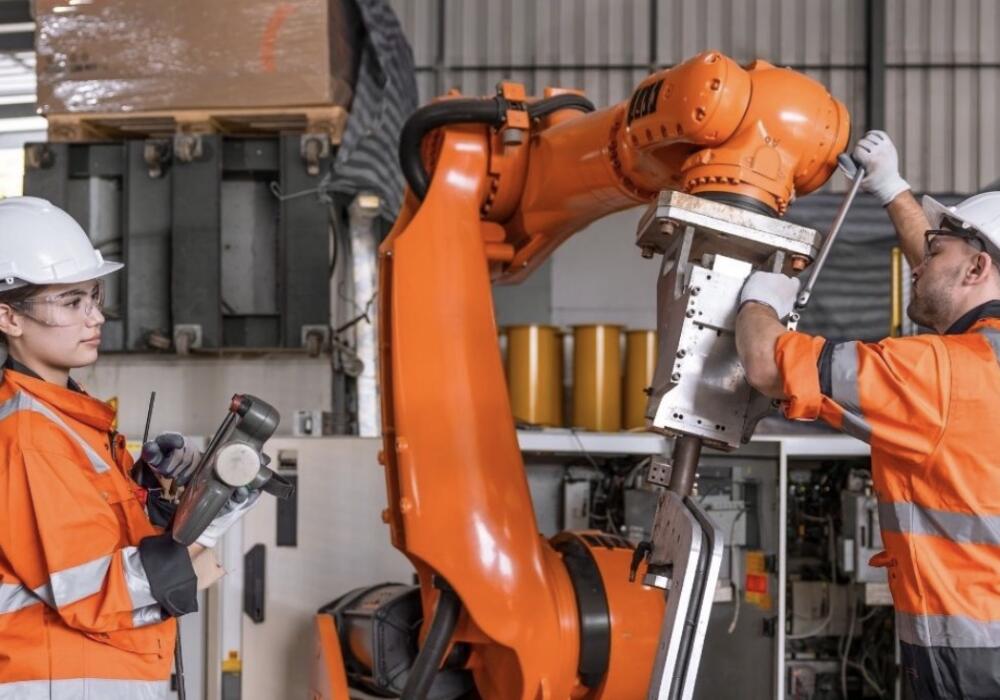
But here is what AI has not learned: the hands-on expertise that your best people carry. The process engineer who can hear when a machine is running slightly off. The welder who knows from feel when a joint will hold. The quality inspector whose eye catches defects that instrumentation misses. This kind of knowledge was never written down, because the people who have it often cannot fully explain it themselves. It was built through years of direct practice, and no amount of data will give it to a machine.
Why this matters for manufacturing?
The practical implication is a paradox. As AI gets better at the formalised, documentable parts of work, the value of the parts it cannot reach goes up, not down. Your experienced operators, technicians, and engineers carry exactly the kind of expertise that AI cannot replicate. That expertise is becoming more valuable, not less.
But this only holds if you use AI to amplify that expertise rather than bypass it. The opportunity cost of ignoring these tools is real: competitors who pair AI with experienced practitioners will move faster, catch problems earlier, and explore design spaces that manual workflows cannot reach. The risk is not that AI will replace your best people. The risk is that you will either ignore AI entirely and fall behind, or adopt it in ways that hollow out the apprenticeship pipeline that produces your next generation of experts.
What should you do now?
Attend the AI Workshop to find out how you can start, stay competitive and make confident, informed decisions about the technologies shaping modern manufacturing.